Recycling and Sustainability at Rubbish Junk
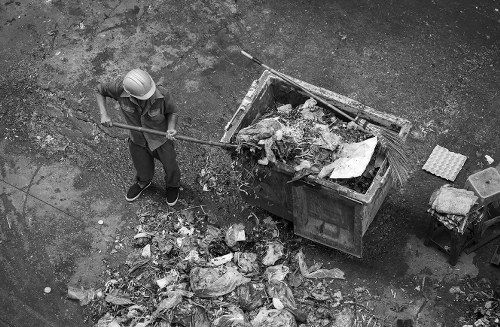 At Rubbish Junk, sustainability is built into the way we clear, sort, and move waste. Our approach to rubbish recycling is designed to keep as much material as possible out of landfill, while making it simple for homes and businesses to dispose of unwanted items responsibly. We work towards a minimum recycling percentage target of 90% across suitable loads, with a clear focus on reuse, recovery, and careful separation of materials before anything leaves the site.
Recycling is never treated as an afterthought. From the moment we collect items, they are assessed for their best next use: direct reuse, refurbishment, material recovery, or responsible disposal. This helps us reduce the environmental footprint of every clearance. Our recycling and sustainability process also supports cleaner neighbourhoods by ensuring waste is directed to the most appropriate local facilities, rather than being mixed and sent unnecessarily to landfill.
We operate with a practical understanding of how different boroughs manage waste streams. In many areas, local authorities encourage separation of mixed recyclables, green waste, metal, wood, textiles, and electricals into different collection or drop-off routes. Our team supports that local approach by keeping recyclable material separated where possible, helping to improve recovery rates and reduce contamination.  That means materials are more likely to be processed efficiently at local transfer stations and specialist sorting facilities.
Using local transfer stations is an important part of our low-impact model. These facilities help reduce travel distance, consolidate loads efficiently, and direct waste to the right processing channels. By working through nearby stations, Rubbish Junk recycling services can lower unnecessary mileage and keep sorting aligned with local infrastructure. It is a straightforward way to improve the environmental performance of every clearance, especially for larger bulky waste removals and mixed-load collections.
We also prioritise partnerships with charities and reuse organisations wherever items are suitable for a second life. Furniture, appliances, homeware, and office items in usable condition may be passed on for charitable redistribution rather than broken down immediately. These partnerships support community causes while reducing waste volume. In practice, this means one person’s unwanted item can become another person’s essential item, which is a practical and social benefit of responsible rubbish recycling.
Our recycling process is also shaped by the types of material commonly found in urban clearances. In boroughs where separate collections are well established, we mirror that logic during sorting by keeping paper, cardboard, rigid plastics, metals, timber, and WEEE items apart where feasible. This improves the chance of each stream being recycled into new products.  Even small details, such as removing contaminants from mixed loads, can make a major difference to overall recovery rates.
To further reduce our footprint, we are investing in low-carbon vans and more efficient route planning. Cleaner vehicles help lower emissions on every journey, especially in dense city routes where stop-start driving can raise fuel use. Combined with smart scheduling, this means we can reduce travel time and avoid unnecessary trips. For customers, it is a practical sign that Rubbish Junk sustainability is not just about what happens to waste after collection, but also how the collection itself is managed.
Low-carbon transport works hand in hand with local sorting. When collections are planned to minimise backtracking and direct waste to nearby transfer stations, emissions fall further. We also encourage careful item separation at the point of collection wherever possible, because a cleaner load is easier to process and more likely to be recycled. This is particularly relevant for boroughs that place strong emphasis on separating food waste, dry mixed recycling, garden waste, and residual rubbish into distinct streams.
Our goal is to make sustainable disposal feel normal, not complicated. Whether we are handling a domestic declutter, a garden clearance, or a commercial waste load, we aim to preserve value in the materials we move.  That includes reusing what can be reused, recycling what can be recycled, and using the right facilities for everything else. Recycling with Rubbish Junk is therefore about making the best possible environmental choice at each stage, from pickup to final treatment.
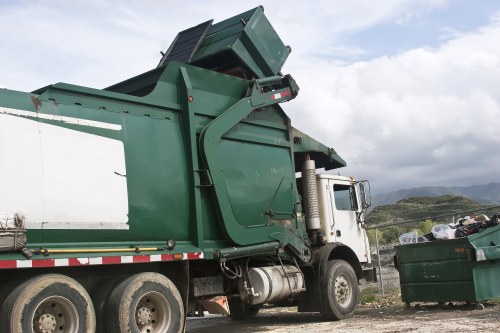 We also recognise that sustainability depends on consistency. That is why our teams follow clear sorting standards and seek to improve diversion from landfill on every job. Items such as metal fittings, untreated wood, cardboard packaging, and suitable plastics are all checked for recycling potential, while electrical items are directed into appropriate recovery pathways. This helps maintain high recycling performance and supports a more circular local economy.
By combining charity partnerships, nearby transfer stations, borough-aware waste separation, and low-carbon vans, Rubbish Junk recycling services are designed around modern environmental priorities. Our recycling percentage target gives us a clear benchmark, while our day-to-day practices ensure that progress is measurable. The result is a practical sustainability model that benefits customers, local communities, and the wider environment.