Commercial Waste Disposal in Rubbish Junk
If you run a business in or around Rubbish Junk, you already know that waste has a habit of building up quickly. Boxes, broken fixtures, packaging, food waste, office clutter, shop refit debris, old stock, and general rubbish can all start affecting how your premises look and work. Commercial Waste Disposal in Rubbish Junk is about more than simply taking rubbish away. It is about keeping your site presentable, helping staff work safely, and making sure waste is removed in a way that suits your schedule, your building, and the type of business you run.
Whether you manage a shopfront, office, café, salon, warehouse, clinic, workshop, or mixed-use property, a reliable local waste collection service can save time and reduce disruption. A good local team understands access issues, loading restrictions, busy streets, back lanes, shared yards, and the need to work around customers, staff, and delivery windows. If you need commercial waste disposal in Rubbish Junk that feels practical and straightforward, this page explains what is included, how the service works, what affects the cost, and why local businesses often prefer a nearby team.
From one-off clearances to ongoing collections, the right service should make disposal simple. You should be able to request a quote, book a suitable slot, and get the job done without unnecessary hassle. If your premises in Rubbish Junk need regular business waste removal or a larger commercial clear-out, the sections below will help you decide what fits best.
Commercial Waste Disposal That Fits Real Local Businesses

Every business creates waste differently. A restaurant deals with food waste, packaging, and front-of-house clutter. An office may need paper, archive material, desks, chairs, and IT-related items removed. A retail store can generate cardboard, product packaging, display materials, and unwanted stock. Workshops and light industrial units often need bulky items, pallets, broken shelving, and offcuts cleared. That is why commercial waste disposal in Rubbish Junk should be flexible enough to suit the site and the type of rubbish involved.
Local properties also vary. In town centres, access may be tight and parking limited. Some premises sit in terraces with shared entrances or narrow service areas. Others have rear access, loading bays, or small yards that require careful planning. A local crew that regularly works across Rubbish Junk and nearby neighbourhoods is better placed to handle these details efficiently, whether the job is a small office clear-out or a larger commercial waste collection.
Another important point is timing. Many businesses can’t afford a collection that interrupts customers, deliveries, or busy trading hours. A good local service can often arrange collection windows that reduce disruption, so your staff can focus on work rather than moving rubbish around all day. That kind of practical support is one of the main reasons customers look for rubbish removal that is specifically built for commercial settings.
What Commercial Waste Disposal Can Include

Commercial waste disposal is usually more varied than standard household rubbish removal. Businesses often need help with a mix of waste types, and a professional service should be able to take away a wide range of non-hazardous items in one visit where appropriate. Depending on the job, the service may include:
- General business waste and bagged rubbish
- Cardboard, packaging, and shrink wrap
- Office furniture such as desks, chairs, cabinets, and shelving
- Shop fittings, display units, and retail fixtures
- Warehouse waste, pallets, and storage materials
- Kitchen and café clearances, excluding any specialist hazardous items
- End-of-lease and pre-refurbishment clearances
- Refit debris, dismantled fixtures, and light construction waste
- Old stock, unsold items, and damaged goods
- Bulky items that won’t fit into ordinary bins
Some businesses need ongoing waste disposal, while others only need help after a move, closure, refurb, or stock change. Both are common in Rubbish Junk. If your premises generate rubbish unpredictably, an on-demand collection can be a useful option. If your waste is regular and steady, a recurring arrangement may be more suitable. The key is choosing a solution that matches your actual workload rather than forcing your business to fit an inflexible system.
It also helps to separate routine waste from one-off clearance waste. A regular collection handles the daily build-up, while a commercial clearance is ideal when you need a larger amount removed quickly. In many cases, businesses use both, especially during busy seasons, relocations, or refit projects.
Who Uses Commercial Waste Removal in Rubbish Junk?
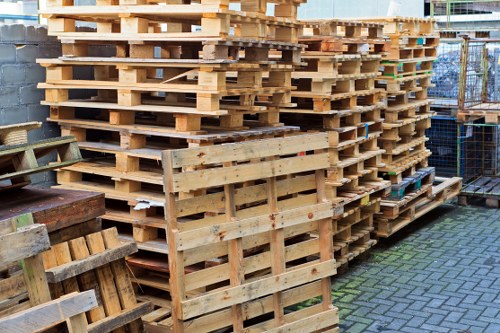
Local waste removal services are used by a wide range of customers. In Rubbish Junk, commercial waste disposal is often booked by independent businesses, property managers, landlords, contractors, and organisations that need dependable rubbish removal without tying up staff time. Common customers include:
- Shops and retail units
- Offices and shared workspaces
- Cafés, takeaways, and restaurants
- Salons, barbers, and beauty studios
- Warehouses and storage facilities
- Tradespeople and small contractors
- Letting agents and property managers
- Schools, charities, and community facilities
- Medical, dental, and professional service offices where permitted non-hazardous waste needs clearing
Why local customers value a nearby team
Businesses often choose a local provider because it can be easier to organise collection at short notice and with less back-and-forth. A nearby team is more likely to understand the realities of local roads, peak traffic times, and common access limitations around Rubbish Junk and surrounding districts. If your premises are on a busy parade, in a converted building, above a shop, or tucked away in a yard, local experience can make a noticeable difference to the smoothness of the job.
There is also value in dealing with a company that knows the local pace of business. A team familiar with the area can often plan collection routes more sensibly, arrive prepared for limited parking, and avoid unnecessary delays. For business owners, that means less time spent coordinating waste removal and more time spent on serving customers and running day-to-day operations.
In short, commercial waste disposal in Rubbish Junk should feel like a service built around your schedule, not the other way around.
How the Service Usually Works

For most customers, booking commercial waste removal should be simple and predictable. While every job is different, the process usually follows a few practical steps:
- Request an estimate or quote — share the type of waste, the amount, and the access details.
- Discuss timing — choose a collection slot that works around opening hours, deliveries, or staff availability.
- Prepare the waste — if needed, gather items in one area so removal is quicker and less disruptive.
- Collection day — the team arrives, loads the waste, and clears away the agreed items.
- Final check — make sure all requested rubbish has been removed and the area is left tidy.
What makes the process easier
Businesses can help the job go smoothly by identifying any access challenges in advance. That might include stair-only access, restricted loading, narrow corridors, time-limited parking, shared car parks, or the need to avoid customer areas during trading hours. If the waste is spread across multiple rooms or floors, it can also help to label what needs removing and what should stay on site.
Commercial sites in Rubbish Junk sometimes include mixed-use layouts, such as a ground-floor retail unit with storage above, or an office above a shop with a service entrance at the rear. These buildings can take a little extra planning, and that is where a local team’s experience becomes valuable. They can assess the space properly and organise the removal in a way that is safe and efficient.
Book your service now if you want to clear business waste without turning the day into a long disruption. The right team should work quickly, carefully, and with respect for your premises.
What’s Included in a Commercial Waste Disposal Visit?

A good commercial waste disposal visit is designed to remove the stress from the job. While every provider will operate a little differently, customers commonly expect the following:
- Loading and removal of agreed commercial waste items
- Careful handling inside offices, shops, storage rooms, or yards
- Efficient collection with minimal disruption to your business
- Sorting of mixed items where suitable and permitted
- Removal of bulky, awkward, or heavy objects
- Clear communication about what is being taken away
- Tidying up the immediate area after loading
Additional support that can be helpful
Some businesses need more than a simple lift-and-load. They may require help dismantling certain items, moving waste from upstairs or rear rooms, or coordinating collection at a time when customer footfall is lower. This is particularly useful for cafés before opening, offices after hours, or retail units during stock rotation. If you are dealing with a refit, closure, or move, the service may also include heavier loads and larger volumes of waste.
It’s worth noting that not every item can be taken in a standard commercial waste collection. Hazardous materials, specialist regulated waste, or items requiring dedicated handling may need a separate arrangement. If you are unsure whether something can be removed, it is best to ask before booking so the service can be planned correctly.
Good commercial waste disposal is not just about removal. It is about clarity, convenience, and knowing what happens next.
Why Businesses in Rubbish Junk Choose a Local Company
When a business chooses a local provider, it often comes down to practical benefits. A nearby team can usually understand the area faster, respond more flexibly, and plan routes with less wasted time. That matters if your site has awkward access, a limited loading window, or a requirement to keep disruption to a minimum.
Rubbish Junk includes a mix of property types, and that variety can influence how waste is collected. A compact high-street unit might need a quick carry-out from front to van. An office in a converted building may need careful navigation through shared entrances. A warehouse or workshop might have bulkier loads that are easier to remove with proper access planning. A local company is more likely to have worked in these settings before and understand what to expect.
There is also a service quality advantage. Businesses generally want the job done without unnecessary waiting, confusion, or repeated explanation. A local team that already understands the area may be able to organise collections in a more straightforward way, especially for regular customers or repeat jobs. That can make the whole process feel less like a chore and more like a normal part of running the business.
Practical reasons local matters
- Faster understanding of access routes and parking realities
- Better fit for time-sensitive collections
- Useful for businesses needing flexible scheduling
- More suitable for varied property layouts
- Helpful for ongoing waste plans and repeat visits
Pricing Factors: What Affects the Cost?
Customers often want to know what shapes the cost of commercial waste disposal before they arrange a collection. While exact pricing depends on the job, several common factors usually affect the estimate:
- Volume — the amount of waste or number of items
- Type of waste — general rubbish, bulky items, packaging, furniture, or mixed commercial waste
- Access — stairs, narrow corridors, parking restrictions, or long carries
- Labour involved — how much lifting, loading, or dismantling is needed
- Urgency — same-day or short-notice bookings may need special scheduling
- Location on site — whether items are at street level, upstairs, in a rear yard, or across multiple rooms
How to get a better quote
To help the team give a more accurate estimate, it is useful to describe the waste clearly. Photos can be helpful if they are allowed in the booking process. The more detail you can share about the amount and type of rubbish, the easier it is to plan the right vehicle, labour, and time slot. This is particularly important for larger commercial clearances where access is tight or the waste is spread out.
Some customers compare regular collections with one-off removals and discover that combining jobs can be more efficient. For example, a business might organise a clearance after a fit-out and then arrange a lighter ongoing service for routine rubbish afterward. That kind of planning can be helpful for keeping a premises tidy without over-ordering collection capacity.
Request a free quote if you want a straightforward way to understand what your collection is likely to involve.
Preparing Your Business Waste for Collection
A little preparation can make commercial waste removal faster and easier. You do not need to do everything yourself, but some simple steps can help the team work efficiently and reduce disruption on the day.
Preparation checklist
- Gather waste into one place if possible
- Separate items that must stay from items to be removed
- Make sure access routes are clear
- Let staff know the collection time
- Reserve parking or loading space if you can
- Remove personal or sensitive documents from cleared areas
- Point out any fragile surfaces, low ceilings, or tight corners
For office and retail customers
If you are clearing an office or shop in Rubbish Junk, it may help to bundle smaller waste into manageable piles so it can be removed quickly. Cardboard boxes can be flattened, and loose packaging can be gathered together. For furniture or shelving, check whether anything needs to be dismantled before the team arrives. This can save time and make the collection more efficient.
For hospitality premises, the focus is often on timing and access. Many cafés, bars, and restaurants prefer collections outside peak trading hours, before opening, or after closing. If your premises have a rear service entrance or shared courtyard, let the collection team know in advance so they can plan the route properly.
Preparing the site well does not mean doing the whole job yourself. It simply helps the collection team complete the work safely and without delay.
Commercial Waste Disposal for Different Property Types in Rubbish Junk
Commercial premises come in many forms, and each one has its own waste challenges. A flexible local service should be ready to adapt to the property type rather than expect every site to work the same way.
Common local settings
- High-street shops with front access and limited parking
- Office buildings with shared corridors, lifts, or stair access
- Mixed-use premises combining retail and storage
- Industrial units with heavier waste and larger open spaces
- Hospitality venues that require discreet timing
- Professional practices that need tidy, careful removal of furniture and fittings
In and around Rubbish Junk, many properties are practical rather than oversized, which makes good planning important. Limited kerb space, busy pavements, shared entrances, and nearby neighbours all influence how the waste should be collected. Businesses in terraced commercial rows, converted buildings, and older premises often benefit from a team that knows how to work around these limitations without causing unnecessary disturbance.
If your site includes more than one floor, a rear yard, or a locked service area, the removal process may need to be adjusted slightly. A local crew can usually work with that, especially when the waste is clearly identified and ready to go. That kind of adaptability is one of the strongest reasons to choose local commercial waste disposal in Rubbish Junk.
Ongoing Waste Collections vs One-Off Clearances
Not every business needs the same type of service. Some customers need regular commercial waste collections to keep daily rubbish under control. Others only need a one-off clearance when they are moving, refurbishing, or clearing out older stock. Many businesses use both at different times of year.
Ongoing collections may suit:
- Shops with regular packaging waste
- Offices with steady paper and general rubbish
- Hospitality venues with daily disposable waste
- Workshops that generate predictable offcuts and debris
One-off clearances may suit:
- End-of-lease property handovers
- Office relocations
- Shop refits and seasonal changes
- Storage room clear-outs
- Pre-sale or pre-let property preparation
Choosing the right option depends on how your business operates. If your waste stays fairly constant, a planned routine collection can be efficient. If your needs change often, a flexible clearance service may be a better fit. Either way, the goal is the same: keep the workplace clean, safe, and ready for business.
Commercial waste disposal in Rubbish Junk should support your workflow, not complicate it.
What Makes a Good Commercial Waste Service?
A good service is easy to work with from the first enquiry through to the end of collection. For local business customers, the most important qualities are often reliability, clear communication, and practical knowledge of the area. You want a team that understands the realities of working around trading hours, access restrictions, and busy premises.
Look for a service that can provide:
- Clear information about what can be removed
- Flexible scheduling to suit business hours
- Experience with different property types
- Respect for your workplace and customers
- Efficient loading and minimal disruption
- Transparent discussion of pricing factors
It is also important that the service is suitable for commercial settings, not just domestic clearances. Business waste often comes with more volume, different access needs, and more time pressure. A provider that regularly handles commercial jobs is more likely to understand those demands and keep the process smooth.
If you are comparing options for rubbish removal, ask whether the team regularly handles offices, shops, cafés, warehouses, or end-of-tenancy commercial clearances. That background can be especially useful when your site has a mix of items and a tight timescale.
FAQs About Commercial Waste Disposal in Rubbish Junk
Can you remove mixed commercial waste in one visit?
In many cases, yes, provided the waste is non-hazardous and suitable for the service. Mixed waste can often be collected together if the team knows what is involved before the booking.
Do I need to sort everything before collection?
Not always. Some separation can help, especially with cardboard, furniture, and general rubbish, but the exact preparation depends on the job. If you are unsure, a quick discussion before the visit usually helps.
Can collections be arranged outside normal business hours?
Often, yes. Many commercial customers prefer early morning, evening, or off-peak collection times to reduce disruption. Availability will depend on scheduling, but local teams are often flexible where possible.
What if my premises have difficult access?
That is common in Rubbish Junk and nearby areas. Narrow stairways, limited parking, rear entrances, and shared loading spaces are all things a local team may already be used to handling. It helps to mention access details when booking.
Do you handle office clear-outs and shop refits?
Yes, commercial waste disposal is often used for office moves, retail refits, and end-of-lease clearances. These jobs frequently involve bulky items, fittings, and mixed debris that need careful removal.
Is this suitable for recurring business waste?
Yes. Some customers need one-off jobs, while others need recurring collections. If your waste output is steady, an ongoing arrangement may be more practical.
Areas Covered Around Rubbish Junk
Businesses often need collections beyond a single street or postcode area, especially when they operate across several sites or manage properties in nearby neighbourhoods. Commercial waste disposal in Rubbish Junk may also serve surrounding local districts, nearby business parks, industrial estates, town-centre properties, and mixed residential-commercial streets.
Nearby coverage can be useful for landlords with more than one unit, tradespeople working across multiple local sites, or businesses with storage and office space in different parts of the area. If your premises sit near a busy route, in a central shopping area, or on the edge of a mixed-use neighbourhood, a local provider can usually plan access more effectively.
When booking, it is a good idea to mention the exact area and any local access concerns. That helps the service plan routes, timings, and parking arrangements properly. If your business operates across Rubbish Junk and nearby areas, ask for a collection that matches the full scope of your site rather than only one part of it.
Contact us today to arrange commercial waste removal that fits your business location and schedule.
Choosing Commercial Waste Disposal in Rubbish Junk for Peace of Mind
At its best, commercial waste disposal removes stress rather than adding to it. You should be able to call on a local service when rubbish starts building up, when you need an office cleared, or when a business move leaves you with a pile of unwanted items. The service should feel practical, efficient, and suited to the real conditions your premises face every day.
For local customers, the value lies in convenience and fit. A team that understands Rubbish Junk and its surrounding areas is better placed to handle loading issues, tight access, busy streets, and the different kinds of properties found across the area. Whether you are managing a shop, office, café, or warehouse, the right waste removal support can help you keep the premises tidy and ready for work.
If your business needs help now, or if you are planning ahead for a clearance, refurb, or routine waste collection, book your service now and choose a solution that works around your operations. From small collections to larger commercial clearances, the aim is the same: remove the waste, protect the workspace, and keep your business moving.
Commercial waste disposal in Rubbish Junk should be simple to arrange and easy to live with afterward.