Office Clearance in Rubbish Junk
If you are planning an office clearance in Rubbish Junk, you may already know that it is rarely as simple as “take everything away.” Offices build up a surprising mix of furniture, filing, equipment, packaging, IT waste, and general clutter over time. Whether you are moving out, refurbishing, downsizing, closing a workspace, or simply trying to reclaim valuable floor space, a professional clearance service can make the process faster, safer, and far less stressful.
For local businesses, landlords, managing agents, and property owners, the main priority is usually the same: clear the space efficiently without disrupting staff, tenants, customers, or building operations. That is exactly where a local team in Rubbish Junk can help. With practical knowledge of local commercial premises, shared buildings, parking restrictions, and tight access points, the right crew can remove items in an organised way and leave the premises ready for the next step.
From compact offices above shops to larger business units, co-working spaces, clinics, workshops, and multi-room commercial premises, office clearance needs to be handled with care. Some items may be reusable, some may need to be recycled, and others require responsible disposal. A well-planned service helps ensure the job is completed with minimal interruption and maximum peace of mind.

What office clearance involves
Office clearance is the removal of unwanted items from a business premises so the space can be emptied, reorganised, handed back, or prepared for a new use. In practice, that often means far more than lifting a few desks. It can include bulky furniture, broken chairs, cabinets, shelves, partition materials, archive boxes, packaging, and a range of everyday office waste.
Many customers searching for office clearance in Rubbish Junk need a service that can adapt to the size and condition of the property. A team may need to work around active staff areas, protect corridors and lifts, or coordinate with building managers if the premises sit in a shared block. In some cases, the service is needed urgently after a lease ends or following a business change. In others, it is part of a planned office fit-out or soft strip-out before decorators, contractors, or new tenants arrive.
It also helps to think beyond furniture. Office clearance can cover a wide range of contents, such as paper records, printer waste, mixed office junk, broken small appliances, old display materials, and surplus stock. Depending on the premises, the job may need to be split into sections so that usable items are separated from general rubbish and recyclable materials. This approach keeps the process orderly and helps reduce unnecessary waste.

Why local office clearance matters in Rubbish Junk
Choosing a local clearance team can make a meaningful difference, especially when access is tight or timing matters. Rubbish Junk includes a mix of residential streets, busy commercial zones, converted properties, mixed-use buildings, and business premises with limited parking. A team that understands the area is better prepared for loading restrictions, delivery windows, narrow stairwells, shared entrances, and the practical realities of getting bulky items out without causing disruption.
For local customers, a nearby service often means more flexible scheduling, quicker site visits when needed, and a smoother experience on the day. If the office is in a high street unit, an upper-floor suite, a modern business park, or a converted townhouse used for professional services, the clearance plan should reflect the building layout. Office clearance in Rubbish Junk is not just about removal; it is about working sensibly within the realities of the local area.
Local knowledge can also help with expectations. For example, some sites have loading bays, some rely on street parking, and others require equipment to be carried through shared entrances or across longer internal routes. A locally experienced crew is more likely to arrive with the right plan, the right vehicle size, and the right approach to complete the work efficiently. That means fewer delays, less back and forth, and a cleaner result.
Types of office clearance we handle
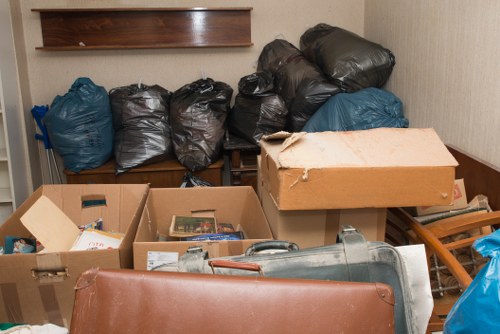
Every workplace is different, and that is why office clearance services need to be flexible. Some customers only need a single room cleared, while others want an entire floor emptied. The right service can be tailored to the scale of the job, the type of contents involved, and whether the office is still in use during the clearance.
Common office clearance jobs in Rubbish Junk include:
- Full office clearances for closures, relocations, or end-of-lease handovers
- Partial clearances for specific rooms, storage areas, or sections of a building
- Furniture removal including desks, chairs, cabinets, shelving, and meeting tables
- Archive and paper removal for obsolete files, folders, and paperwork
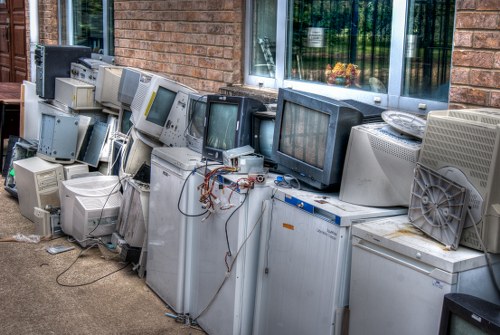
- IT and equipment clearance for printers, monitors, keyboards, cables, and small electrical items
- Commercial rubbish removal from back rooms, store cupboards, and shared workspaces
- Strip-out support where loose non-structural items need clearing before refurbishment
In many offices, there is also a need to separate categories carefully. Mixed office junk can include recyclable cardboard, plastics, metals, and items that may be suitable for reuse. A thoughtful clearance process helps ensure each load is dealt with appropriately rather than everything being treated the same way. That is especially useful for businesses that want a tidy handover and a responsible approach to disposal.
What is included in the service
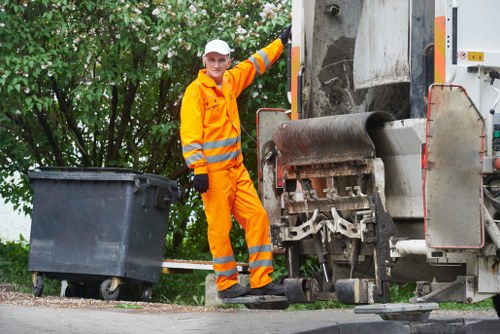
When booking office clearance in Rubbish Junk, most customers want to know what the service actually covers on the day. While every job is different, a professional clearance normally begins with a review of what needs to be removed and how access will work. From there, the team can plan the safe lifting, sorting, and loading of items so the space is left ready for use or inspection.
Typical inclusions may involve:
- Loading and removal of office furniture and junk
- Careful handling of bulky or awkward items
- Clearing from ground-floor and upper-floor premises where access allows
- Working around desks, corridors, entrances, and shared spaces as needed
- Separation of reusable, recyclable, and general waste materials
- Responsible disposal of collected office contents
- Basic tidy-up after the main clearance has been completed
Some customers also need the clearance to happen in stages. For example, a business may want one office cleared first, then storage rooms, then reception areas, or the job may need to be arranged around staff presence. A local team can often work with that kind of phased plan, which is particularly helpful for live offices, retail-adjacent premises, and properties where business operations continue during the day.
Important note: if your office contains confidential files, specialist equipment, or items that require special handling, it is best to mention this during enquiry so the clearance can be planned properly. That includes anything sensitive, fragile, or unusually heavy.
How the process works
A good office clearance service should feel straightforward from the start. Customers often prefer a process that is clear, practical, and easy to arrange. In Rubbish Junk, the usual steps are simple and designed to keep the job moving without unnecessary complications.
- Initial enquiry: You describe the office, the amount of items, and the type of clearance required.
- Assessment of access: Details such as stairs, lifts, parking, loading space, and timing are reviewed.
- Clearance plan: The team works out how the removal will be completed efficiently and safely.
- On-site removal: Items are taken out, loaded, and separated where needed.
- Responsible disposal: Waste is handled in line with the nature of the items collected.
- Final check: The area is reviewed to make sure the agreed space has been cleared.
This process is useful for all types of customers, including landlords preparing a space for new tenants, office managers clearing surplus furniture, and business owners who need to empty a room before renovation. It also helps commercial clients coordinate with cleaners, decorators, and fit-out teams because the premises can be handed over in a more orderly condition.
If you are dealing with a larger property, it can help to break the job into zones. Reception, meeting rooms, storage cupboards, open-plan desks, and back offices may all need to be cleared in a different sequence. That makes the work easier to manage and helps reduce disruption for anyone still using the building.
Common reasons customers book office clearance
There are many reasons local customers look for office clearance in Rubbish Junk, and the needs are often time-sensitive. Businesses do not usually want clearance to drag on, especially when a deadline is involved. Understanding the reason for the job helps shape the service around what matters most.
Typical reasons include office relocation, end of tenancy, downsizing, refurbishment, consolidation of departments, replacement of old furniture, clearing after a lease break, and recovery of space in an overfilled storeroom. Some workplaces simply reach the point where accumulated items make the office feel cramped, inefficient, and harder to keep clean. Clearing unnecessary contents can immediately improve the way the room feels and functions.
Commercial customers also use clearance services when a premises changes hands. A landlord may need a unit emptied between tenancies. A managing agent may need support after a tenant vacates. A business owner may want the office stripped of unwanted items before new carpet, flooring, or layouts are installed. In each case, prompt removal and orderly handling are important.
Office types we commonly work with
Rubbish Junk includes a range of property types, and clearance needs vary accordingly. A local service should be prepared for different layouts and access conditions, including:
- Small professional offices above shops
- Shared workspaces and serviced offices
- Clinics and consultation rooms with office back areas
- Retail stock rooms and administrative spaces
- Workshops with office sections attached
- Business units on estates or in mixed commercial buildings
- Converted homes used for professional services
These settings often come with practical challenges. Shared hallways, lifts, tight staircases, and limited parking can all affect how the clearance is completed. A local team that understands these issues can plan a safer and smoother removal.
Why businesses value a tidy handover
For many customers, office clearance is not just about making room. It is about handing over the premises in a presentable state. That may matter to a landlord, a building manager, a client receiving the property, or a team preparing for refurbishment. A properly cleared office can make inspections easier, reduce delays for the next contractor, and avoid last-minute stress.
It can also support better decision-making. When old furniture, boxes, and unused items are removed, it becomes easier to assess the actual space available. Businesses often realise that the room can be used more effectively once the clutter has gone. In that sense, office clearance can be the first step in making a workspace more practical and organised.
Preparation checklist before the clearance
Most customers do not need to do a huge amount of preparation, but a little planning can make the service faster and more efficient. If you are arranging an office clearance in Rubbish Junk, these simple steps may help:
- Separate items you want to keep from items you want removed
- Label anything sensitive, fragile, or important
- Remove personal belongings from desks, drawers, and cupboards
- Identify any items that should be left in place
- Tell the team about access issues such as stairs, restricted parking, or lift use
- Let relevant staff know when the clearance will happen
- Keep entrances, corridors, and loading points as clear as possible
If there are archived documents, confidential records, or hardware that needs special handling, mention it before the job begins. That helps avoid confusion on the day and ensures the clearance plan matches the contents of the office. For live offices, it may also be worth deciding in advance which rooms need to remain operational during the removal.
Tip: if the building has shared access or managed parking, checking those arrangements ahead of time can save delays. This is especially useful in busier local streets and multi-occupancy buildings where access must be coordinated carefully.
Pricing factors for office clearance
Customers often ask what affects the cost of office clearance. While it is not helpful to guess at exact prices, there are several common factors that influence how a quote is put together. Understanding these can make it easier to compare services fairly and decide what level of support you need.
Pricing factors usually include the volume of items, the type of waste, the ease of access, the number of floors involved, and how much labour is required to move heavier furniture or equipment. An office on the ground floor with easy loading access may be simpler to clear than a property with narrow stairs, limited parking, or long internal carrying distances. Jobs that involve a larger amount of mixed contents may also need more time and sorting.
Other factors can include whether the service is a partial or full clearance, whether the premises are occupied during the removal, and whether specific items need careful handling. For example, desks, filing cabinets, and large meeting tables often require more than one person and a sensible route out of the building. If the office includes a lot of archive material or small loose items, the job may also take longer than a straightforward furniture removal.
The best approach is to request a quote based on accurate information. A local team can usually give a more useful estimate when they know the approximate size of the job, the type of property, and any access challenges. That helps avoid misunderstandings and makes the booking process smoother.
Why choose a local company in Rubbish Junk
There are practical reasons customers often prefer a local business for office clearance in Rubbish Junk. A nearby team is more likely to understand the local road patterns, parking pressures, and property layouts that affect a commercial clearance. That can save time on the day and reduce the chance of unnecessary disruption.
Local companies also tend to be more responsive when plans change. If a move is brought forward, a tenancy ends earlier than expected, or a refurbishment schedule shifts, a local office clearance provider may be easier to coordinate with than a distant one. For businesses working to deadlines, that flexibility can make a real difference.
There is also value in using a service that deals regularly with residential and commercial customers in the same area. Rubbish Junk includes a mix of office premises, small businesses, and property types with limited access. A team that already understands those settings can arrive prepared with the right approach rather than treating every job as if it were the same.
Local benefits customers appreciate
- Better awareness of access and parking constraints
- More suitable scheduling for local business premises
- Experience with mixed-use and commercial buildings
- Less disruption to staff and neighbouring properties
- Efficient handling of bulky office furniture and mixed contents
- Practical support for time-sensitive moves and handovers
These advantages are especially helpful when the office is in a busy area, on an upper floor, or in a property where loading must be carefully timed. Local experience does not just make the job easier for the team; it makes the process smoother for the customer too.
Environmental and responsible disposal considerations
When clearing an office, not every item should be treated as general rubbish. A sensible office clearance service will consider what can be separated for reuse, what can be recycled, and what needs to be disposed of appropriately. This matters because office environments usually contain a combination of materials, from metal and wood to plastics, cardboard, and electronic items.
Responsible handling is particularly important for items such as computer equipment, printer components, and mixed office waste. Even if the customer only sees “old stuff,” a proper clearance process takes into account how different materials should be dealt with once removed from the property. That is one reason many local businesses prefer a service that can manage the whole process rather than simply collecting a pile of contents and leaving the rest to the customer.
If your office contains items that are still usable, it is worth flagging that at the enquiry stage. Some businesses like to keep reusable items aside for internal use, while others want a full clear-out. Either way, clear communication helps the team remove only what is needed and avoid unnecessary waste.
Frequently asked questions
Do I need to empty the office before the team arrives?
Not usually. Most office clearance jobs can be handled with minimal preparation, although removing personal belongings and clearly identifying anything to keep will make the process smoother. If the room contains confidential materials or valuables, those should be secured in advance.
Can you clear offices while staff are still working?
Yes, in many cases. If the premises are occupied, the clearance can often be planned around staff movements, meetings, or customer hours. It is helpful to identify which areas need to stay open and which can be cleared first.
What if the office is in a building with no easy parking?
That is common in parts of Rubbish Junk. Tight access, loading restrictions, and shared entrances can all be managed with planning. When requesting a quote, it helps to explain the parking situation so the team can prepare properly.
Do you handle heavy furniture and awkward items?
Yes, office clearances often involve heavy desks, filing cabinets, tables, and stacked equipment. These items are usually removed as part of the service, provided the access is safe and practical.
Can you help with a full office closure?
Absolutely. Full office clearance is one of the most common requests. Whether the space is being handed back, refurbished, or repurposed, the clearance can be arranged to suit the timetable.
What kinds of premises in Rubbish Junk do you clear?
Local offices come in many forms, including professional suites, upper-floor units, converted properties, business spaces, and mixed commercial premises. The service can be adapted to the layout and access of the building.
What makes a good office clearance experience
A good clearance experience usually comes down to three things: clarity, reliability, and practical handling. Customers want to know what is being removed, when it will happen, and how the work will be completed. They also want the job done without unnecessary disruption or confusion.
For office clearance in Rubbish Junk, that means clear communication about the scope of work, awareness of local access issues, and a careful approach to loading and removal. It also means understanding that businesses are often working to deadlines. A service that respects that pressure while keeping the process organised is likely to be far more useful than one that treats the job casually.
Book your service now if you are ready to clear office space, make room for new plans, or prepare a property for handover. If you are still deciding, request a free quote and share the details of your premises, the type of items involved, and any access concerns. The more information you provide, the easier it is to recommend the right approach.
Areas covered across Rubbish Junk and nearby
Local office clearance services are especially valuable when customers need support across a broad area rather than just one building type. In and around Rubbish Junk, customers may be based in central commercial streets, quieter side roads, business estates, or mixed residential-commercial zones. Nearby areas may include locations with similar property layouts, parking constraints, or office premises in converted buildings.
That flexibility matters because no two jobs are identical. An office in one part of the area may have easy ground-floor loading, while another nearby may involve multiple flights of stairs and strict access times. A local team that works across the surrounding districts can adapt more easily and help customers plan a removal that fits the building rather than forcing the building to fit the removal.
If your workplace is in a nearby area and you are not sure whether the service can cover you, it is sensible to ask. Many customers simply need confirmation that their premises type, access route, and collection needs can be accommodated. A quick enquiry is often the easiest way to find out.
Final thoughts for local customers
An office clearance can feel like a big task, especially when time is short or the premises are full of bulky, mixed, and awkward items. The good news is that it does not need to be difficult. With the right local service, the job can be arranged in a practical way that reduces stress, protects the building, and gets the office ready for whatever comes next.
Whether you are clearing a compact workspace, a shared office, a full commercial unit, or a property that needs to be emptied before the next stage, office clearance in Rubbish Junk is best handled by a team that understands both the contents and the location. Local knowledge, sensible planning, and careful removal all help to make the process smoother from start to finish.
If you are ready to move forward, contact us today to discuss your office clearance needs, request a free quote, or book your service now so your space can be cleared without delay.